Why College Looks Different Today in the Philippines
Gone are the days when “going to school” meant squeezing into a packed jeepney, clutching a heavy binder, and hoping the classroom ceiling fan actually works. The Philippine educational landscape has undergone a major glow-up. And if you’re a student in 2026, the rules of the game have definitely been reset.
This was not a small change. It was a complete shift. It began with the pandemic, which forced everyone to learn from home. Today, education has evolved: what matters more is what you can actually do, not just what is written on your diploma. Being a student now is not only about sitting in a classroom; it is about being tech-savvy, financially aware, and developing skills that make students employable.
We’re going to look at four major shifts in college life in the Philippines: a glimpse of how things used to be versus how they are today. Plus, we’ll share some student survival tips to help you prepare for college.
College Life in the Philippines: The Before and After
- The Digital and Hybrid Learning
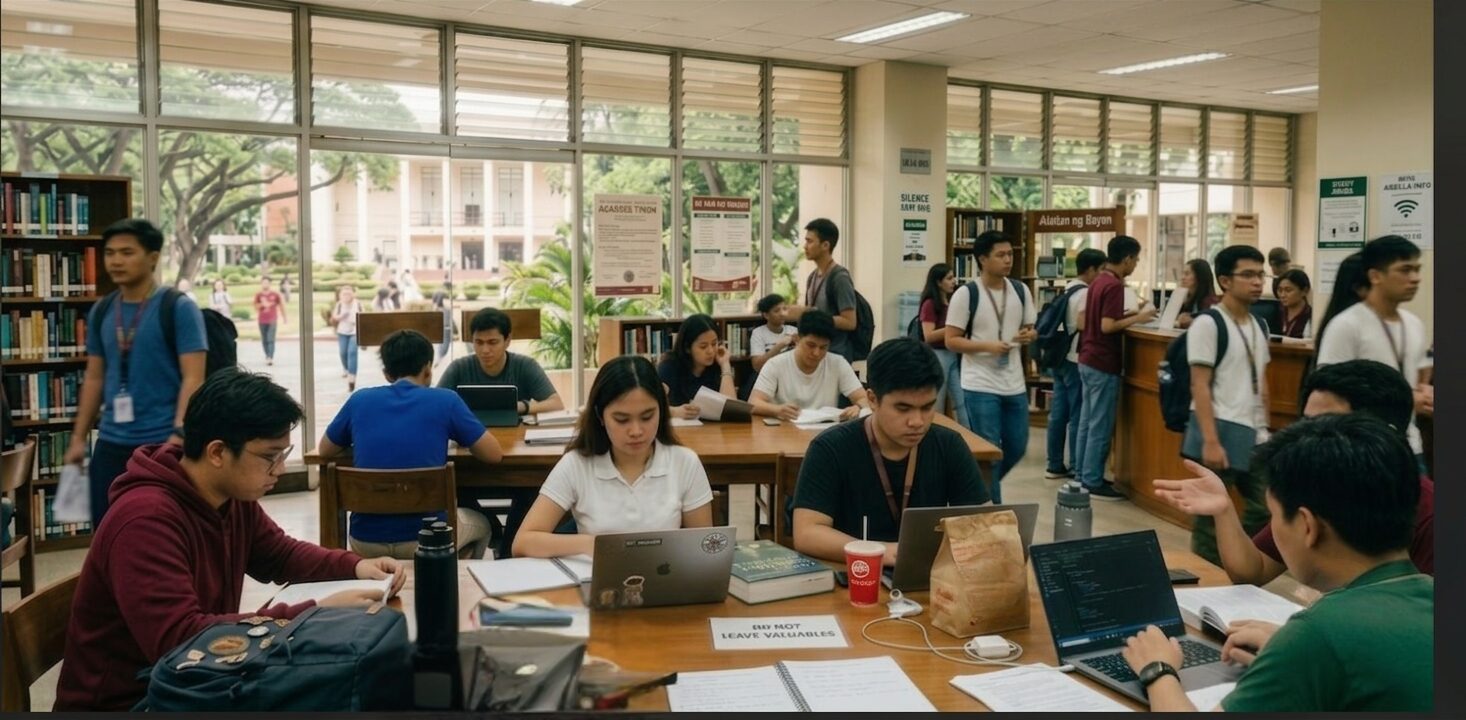
From “siksikan” classrooms to digital setups, this is the new normal. Today, digital and hybrid learning is no longer an exception. It has become the standard. Most Philippine universities have fully stepped into the digital era. Filipino students no longer need to sit in wooden chairs every single day. Instead, they now follow a “hybrid” rhythm that blends the physical classroom with the digital world.
- Before: Students had to be on campus from Monday to Friday, usually from 7 AM to 5 PM. They carried backpacks filled with thick textbooks that could literally give you back pain. If you got stuck in traffic or it rained heavily, you risked missing the entire lesson.
- After: Students now go to campus around two to three times a week for labs, P.E., or group activities. The rest of the week is spent attending classes online from your bedroom, a study corner, or even a quiet café. And your “backpack”? Everything is now stored in a laptop or tablet, with all your books and files in one place.
A Survival Tip: Invest in a good pair of noise-canceling earphones. Your neighbor’s karaoke or the barking dogs outside will not care that you are in the middle of a graded oral exam.
- K–12 and the “Compressed” College Curriculum
If your freshman subjects feel a bit “thin,” you can thank the K–12 system. Senior High School (SHS) now covers many of the General Education (GE) subjects that used to take up the first two years of college, such as basic literature, math, and communication. As a result, college education has become more specialized, faster-paced, and more focused on major subjects.
- Before: The K–12 system did not exist. The first two years of college were essentially an extension of high school, with general subjects like English, Filipino, and Math. These courses helped shape students’ grades before they moved on to more specialized subjects in their later years.
- After: With the implementation of K–12 in the Philippines, these general education subjects are now completed during Senior High School. College now starts immediately with major subjects, with little to no transition period. Students are expected to have already mastered the basics upon entry.
A Survival Tip: Don’t throw away your SHS notes. You will likely need them again, since many college professors expect you to recall key lessons from Grade 11 and 12 without much review.
- Financial & Institutional Challenges
Let’s be honest: the cost of earning a degree is rising fast. Tuition fees, “miscellaneous” charges, and even the price of a reliable laptop have pushed many students to look for more practical alternatives.
- Before: Most students relied mainly on their parents’ allowance. Working while studying was uncommon and often associated with financial difficulty. Students typically focused on academics and waited until after graduation before entering the workforce.
- After: Today, having a “side hustle” is almost the norm. It is now common and even encouraged for students to earn while studying. Many take on online selling, freelance work, or part-time jobs such as virtual assistance, often during evenings or weekends. In addition, more students are choosing state universities due to free tuition programs, prioritizing affordability over prestige.
A Survival Tip: Learn how to budget early. Between academic expenses and daily transportation costs, money can disappear quickly. Also, take advantage of student discounts whenever possible, from streaming subscriptions to food and transportation.
- Skills Over Degrees
Perhaps the biggest plot twist in recent years is the shift from degrees to skills. A diploma is still a proud milestone for any Filipino family, but the job market is increasingly valuing what you can actually do over what your transcript says.
Traditional Path vs Modern Skill-Based Path
|
Traditional Path |
Modern Skill-Based Path |
|
Focus on GPA and Latin Honors |
Focus on portfolio and projects |
|
A 4-year degree as the main goal |
Certifications (AWS, Google, Coursera, etc.) |
|
General knowledge-based learning |
Specialized, work-ready skills |
Today, companies are actively looking for “micro-credentials.” Being a “Mass Comm grad” is great, but a “Mass Comm grad with certifications in SEO and Data Analytics” is what makes candidates stand out in the hiring process.
A Survival Tip: Start building your portfolio as early as possible. Don’t wait for graduation to gain experience. Join internships, take online certifications, and work on real or personal projects. Even small outputs (like writing samples, design work, or case studies) can make a big difference when applying for jobs.
A New Era of Opportunity
College life in the Philippines may not look the same as before, but in many ways, it has changed for the better. Filipino students today are becoming more adaptable and resilient, qualities that are essential for success in an increasingly competitive world.
Today’s educational landscape is not just “different.” It is more innovative and accessible than ever. Hybrid learning models and digital tools have become powerful learning companions, allowing students to study from virtually anywhere without being confined to a traditional classroom setup. This flexibility makes it easier to balance academics with personal growth and real-world experience, helping students become more well-rounded by the time they graduate.
At AHEAD Tutorial and Review, we have witnessed these changes firsthand. For over 30 years, we have evolved alongside the Philippine education system, continuously innovating to stay ahead of the curve. From the transition to K–12 to the rapid shift to digital learning, AHEAD has remained a trusted leader, delivering high-quality, personalized learning experiences that help students thrive in any environment.
Ready to navigate the new academic landscape? AHEAD is here to guide you. Whether you need support in mastering your Senior High School program, preparing for college entrance exams, or staying on top of your major subjects through personalized tutoring, we are ready to help.
Explore AHEAD’s world-class services today and take the first step toward your future.